

Glamping Dome Tent
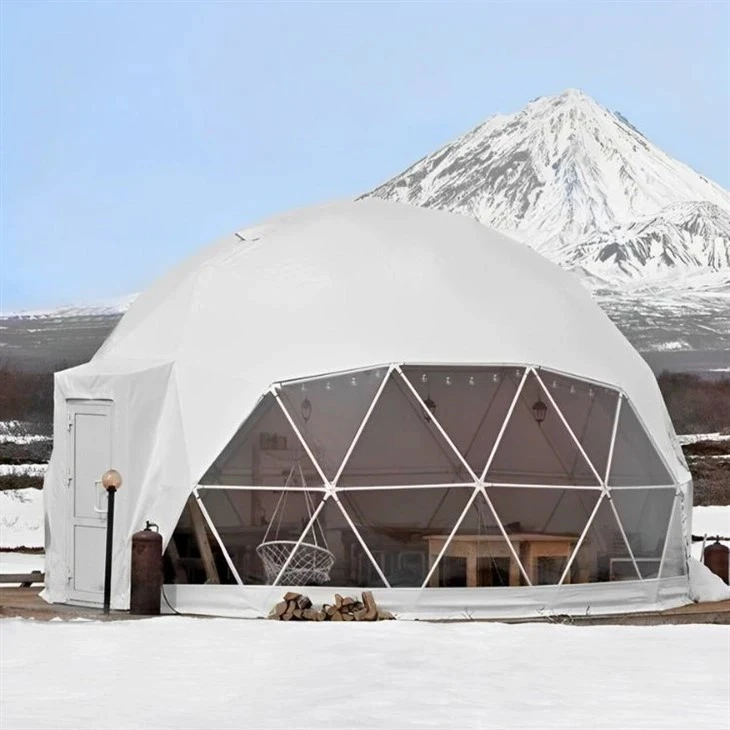
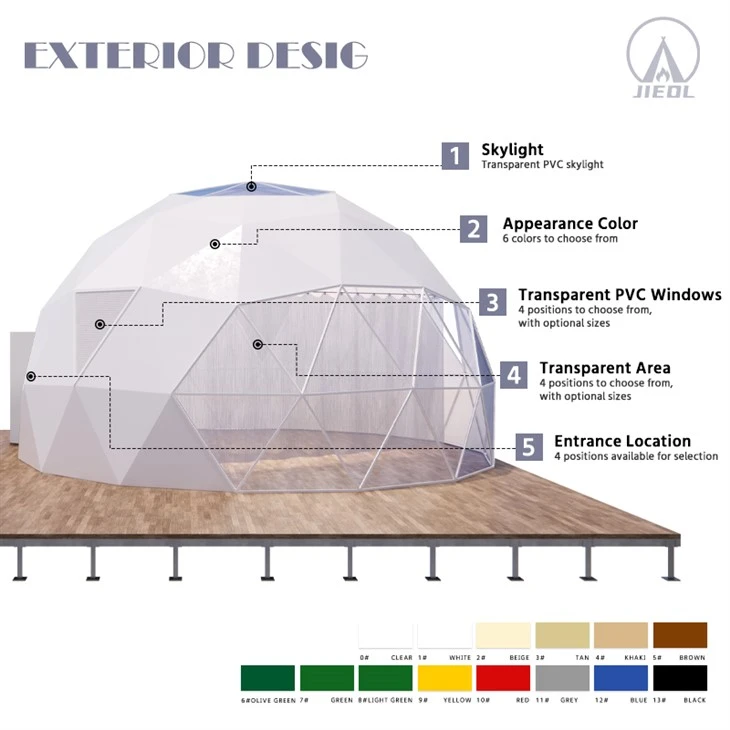
Glamping dome tents are easy to spot due to their unmistakable dome-like shape. Most dome tents have a square or rectangular base with two or more flexible poles positioned in half-circles and crossing overhead to create their characteristic dome structure.
- Fast Delievery
- Quality Assurance
- 24/7 Customer Service
Product Introduction
The headquarters of Jieol Ltd. is advantaged located in the Guangzhou international economy development center-PANYU. Jieol is featured in products design, R&D, production, as well as export. Its product lines include Aluminum outdoor event tent , Geodesic Dome Tent, Tensile Membrane structure, Aluminum Lighting Truss , Mobile Stage, Portable Folding Stage system, as well as Stage Machines and relevant Stage Accessories. All of the products are sold in all over the world, almost 108 countries.

Why Choose Us
Our Product
Outdoor event tent, camping tent.
Product Application
Outdoor event, wedding , party , warehouse storage , camping.
Our Factory
Jieol has a modern production base covering nearly 10,000 square meters and advanced hardware processing equipment ,In Jieol company, the selected high grade raw materials (International Aviation Aluminum),the first-class design team, professional manufacture engineer along with high standard and strict monitoring system are the proof of our commitment to the product quality.
Our service
Customer service, we customized their own product according to customer varies of requirement , based on the local environment , from a user-experience perspective ,combined with most. Professional and serious design concept,and we nominate the exclusive engineer to guide the installation.

Jieol's Glamping Sunroom Tent is a fully transparent tent. This tent can accommodate 6, 8, or 12 people as needed, providing a tent area with a diameter of 3.5m, 4m, 4.5m, offering you a spacious space, mainly used as a dining room and living room. The tent wall uses Bayer PC material, which is very hard and cannot be damaged under normal circumstances.

Jieol's Shell Shape Glamping Tent is a standard room type tent, uniquely designed to resemble a shell, both beautiful and practical. It has a simple configuration with 1 door and 1 window, offering three sizes of 5×8m, 6×8.5m, and 8×12m for you to choose, to meet different outdoor needs. The indoor space is respectively 5×6.5m, 6×7m, and 8×9.5m, with a top height of 3.6m, bringing you a spacious and comfortable living environment.

Jieol's Two Story Tent is a family room type (double-layer) tent, equipped with 2 doors and 5 windows, providing ample ventilation and lighting to ensure your living comfort. The tent area reaches 45m², divided into two floors, with the first floor being 31m² and the second floor 20m², accompanied by two terraces measuring 13m² and 11m² respectively. The top height of the tent is 5m, and the height of the first floor is 2.2m, offering a comfortable living experience.

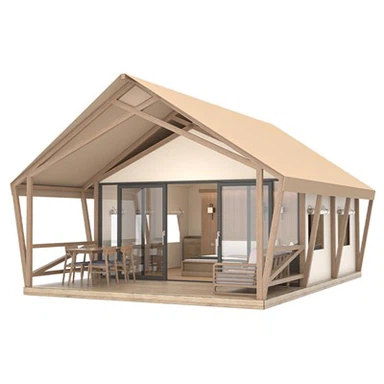
Whether in the desert, by the beach, in the forest, or on an island, the Safari Lodge Tent from Jieol provides a safe, comfortable, and natural living space. Moreover, it possesses multiple performance features such as waterproofing, fire resistance, and wind resistance, ensuring a comfortable living experience in any environment.

Jieol's Bubble Dome Tent is a new popular outdoor accommodation and activity tent. It is crafted with high-quality transparent Bayer PC material, providing a 360-degree panoramic view while also protecting from environmental factors (such as wind, rain, snow, hot weather, and cold weather).
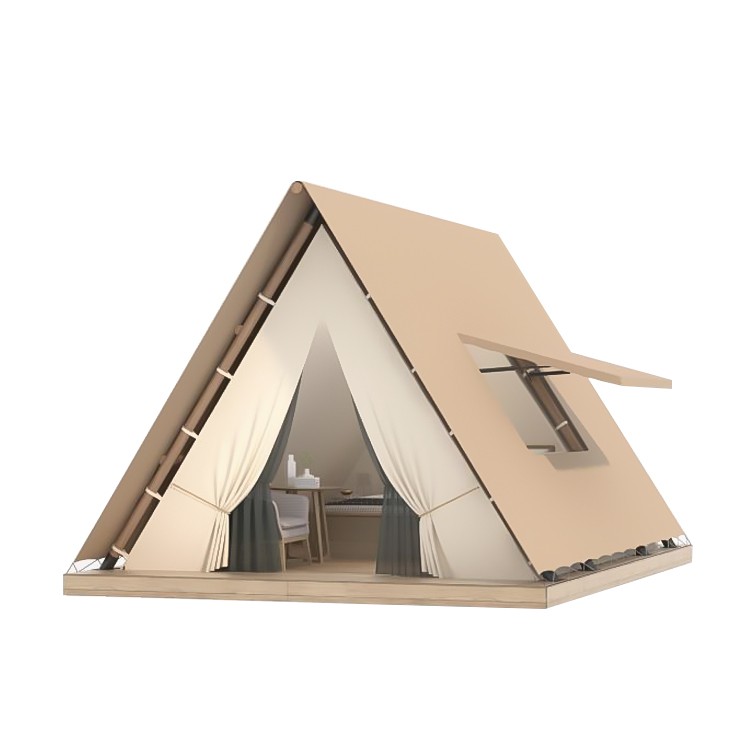
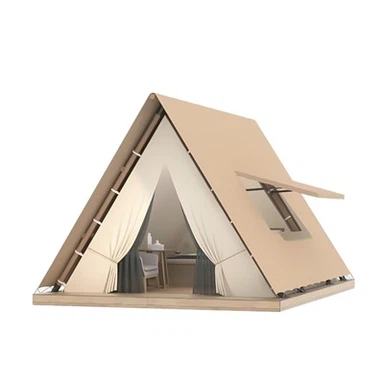
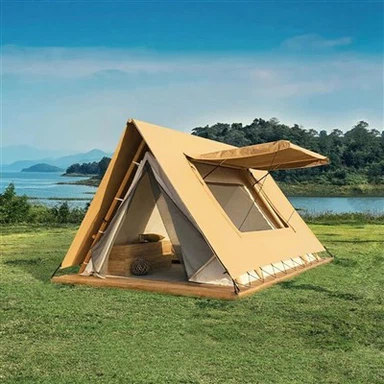
Jieol's A-Frame Tent: Glamp in style with a durable 3m x 3m space, customizable for any home decor. Waterproof, fireproof, UV-resistant.

Jieol's homestay tents are sold worldwide, offering custom-designed luxury tents and a unique lodging experience.

Discover luxury in the wild with Jieol's Glamping Safari Tent. Crafted for comfort and style, it's your ultimate outdoor retreat. Now get the free quote!

Indulge in outdoor opulence with Jieol's Luxury Camping Tent. Immerse yourself in the epitome of elegance and comfort under the stars.
What Is Glamping Dome Tent
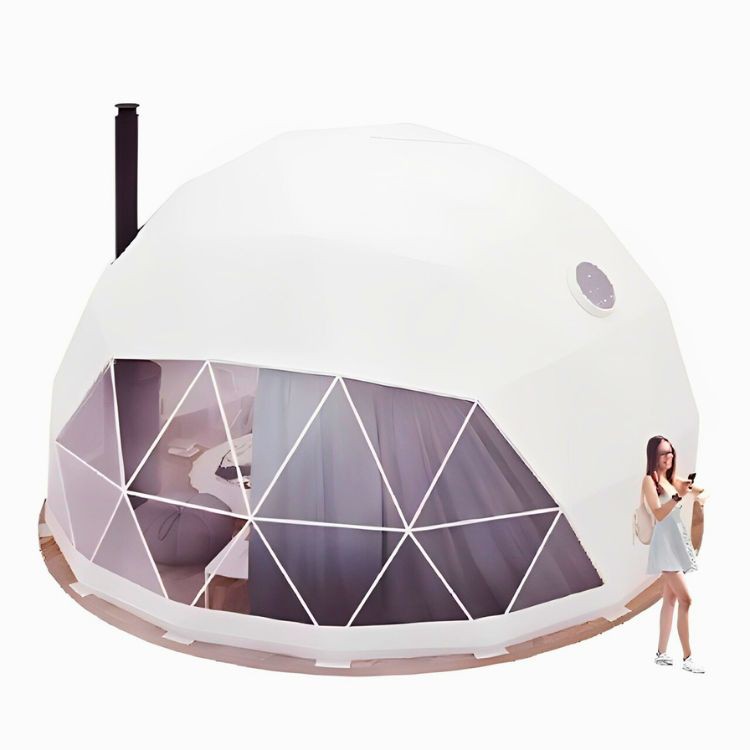
Glamping dome tents are easy to spot due to their unmistakable dome-like shape. Most dome tents have a square or rectangular base with two or more flexible poles positioned in half-circles and crossing overhead to create their characteristic dome structure.Ecause of the slope of the dome, these tents generally have a lot more room – especially compared to basic ridge tents. Glamping dome tents are a popular type of camping tent that combines luxury with convenience. These tents offer a multitude of features and benefits. Our Glamping Dome Tents feature a modular design, facilitating easy transport and assembly. They can be quickly set up without the need for professional tools, resulting in no construction waste.
Advantages of Glamping Dome Tent
Interior space
Dome tents offer a good balance between interior space and cost. The design maximizes the usable area, allowing for more interior arrangements.
Ventilation
Many dome tent come with vents and windows to promote air circulation. This feature is especially useful in hot and humid weather conditions.
Stability
The dome shape provides excellent stability, allowing the dome tent to withstand wind and other adverse weather conditions. The circular shape helps to distribute force evenly across the structure, maximizing snow load capacity.
Durability
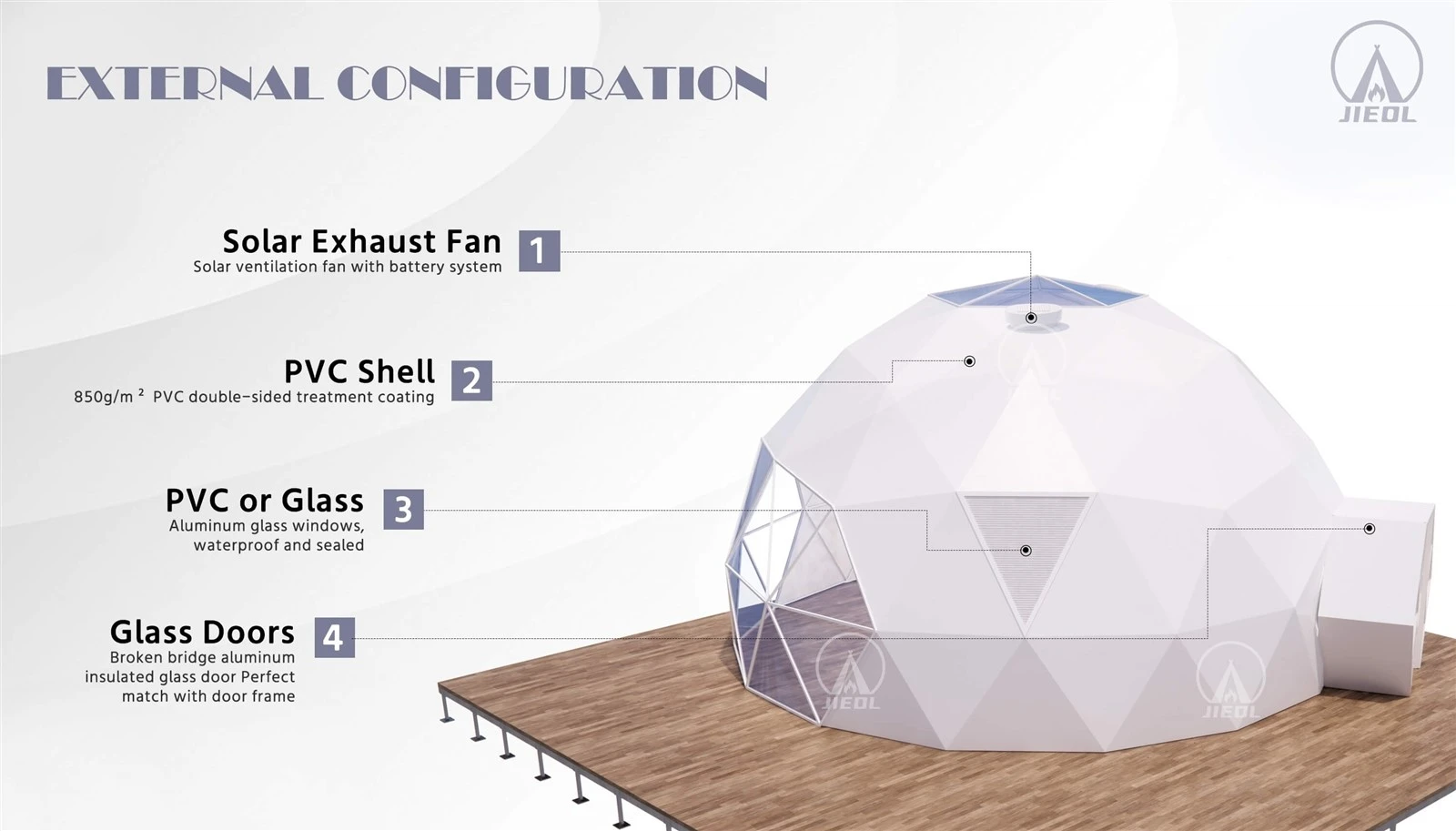
The cover material of the dome tent can better achieve UV protection, mildew resistance, fire resistance and water resistance. They are designed to withstand the outdoor elements and provide long-lasting use.
How to Pitch a Glamping Dome Tent
Lay out the tent
First pick a location (preferably one that is clear of debris) and lay out the tent. If the dome tent comes with a tarp you will want to lay that out first, and then spread out the tent on top of it while making sure the right side is facing up.
Assemble the poles
Most dome tents come with flexible poles that are folded when stored. These poles consist of small sections that are connected with an elastic bungee cord that runs inside them. All you need to do is attach the small sections together and the cord should ensure that they fasten into place.
Run the poles through the tent
While there are different variants of dome tents, most will have flaps or tubes at the top of the tent where the poles can be inserted. Just run all the poles through the appropriate flaps so that they cross at the center.
Raise the tent
Raising a dome tent is easy, and you just need to take the each pole and fasten it to the eyelets at each corner. As you insert the opposite side of each pole you will have to bend them (which may require a bit of force) and the tent will start to rise and take shape.
Stake the tent and attach the rain fly
In many cases this step is optional as you may prefer your tent to remain free standing and may not need a rain fly. Normally staking a dome tent is easy as there are eyelets near the base that you can stake down, and attaching a rain fly involves draping it over the tent and staking it into place similarly.
Dome Tent fly's (outer weather proof shell) are usually made of nylon, polyester or a mixture of both. Polyesters are inexpensive to produce, do not absorb moisture and have high resistance to UV radiation. Nylons provide high tensile strength but also absorb moisture and are very susceptible to the chemical degradation caused by UV light. However, most fabrics are now coated with various Polyvinylchloride (PVC) or Silicone polymers which have made the two fabrics very similar in quality and performance. PU and Silicone coatings are far more common in today's domes as although PVC is an excellent barrier to water vapour, it is heavy, and is particularly inflexible at low temperatures. Whether you chose a tent with a nylon or a polyester fly it doesn't really matter too much (manufacturers often have both nylon and polyester tents in their range and/or vary which fabric type they use depending on new technologies, availability and pricing). In short, tent fabrics are continually under review.
The floor fabrics of tents are generally made in heavier fabrics with additional waterproof coating to make them more durable and watertight. Heavier weight nylons and polyesters are typically used in combination with a PVC coating.
Components of Glamping Dome Tent

Tent floor length
If you're tall (over 6 feet) or like additional space, consider a tent with a floor length of 90 inches (rather than the more typical 84-88 inches).
Tent doors
When choosing your tent, think about the number of doors you need as well as their shape and orientation. If you're camping with your family, multiple doors help you avoid climbing over each other for midnight bathroom breaks. Cabin-style tents tend to shine in this area. Also note how easy or noisy the doors are to zip open and shut. YKK zippers on the doors resist snagging and breaking better than others.
Tent poles
A tent's pole structure helps determines how easy or hard it is to pitch. Virtually all family tents these days are freestanding. This means they do not require stakes to set up. The big advantage of this is that you can pick the tent up and move it to a different location prior to staking. You can also easily shake dirt out of it before taking it down.
Fewer poles allow faster setups. It's also easier to attach poles to clips than it is to thread them through long pole sleeves. Many tents use both clips and short pole sleeves in an effort to balance strength, ventilation and setup ease. Color-coded corners and pole clips also make setup faster. Aluminum poles are stronger and more durable than fiberglass.
Rainfly
A rainfly is a separate waterproof cover designed to fit over the roof of your tent. Use it whenever rain or dew is expected, or any time you want to retain a little extra warmth. Two rainfly types are common. Roof-only rainflies allow more light and views while offering fair rain protection. Full-coverage rainflies offer maximum protection from wind and rain.
Vestibules / garage
Shelters or awnings attach to your tent for the purpose of storing or sheltering your muddy or dusty boots or keeping your packs out of the rain. They can be an integral part of the rainfly or add-on items that are sold separately.
Ventilation
Mesh panels are often used in the ceiling, doors and windows of tents. This allows views and enhances cross-ventilation to help manage condensation. For hot, humid climates, seek out larger mesh panels.
Interior loops and pockets
A lantern loop is often placed at the top-center of a tent's ceiling for hanging a lantern. Loops on interior tent walls can be used to attach a mesh shelf (called a gear loft, sold separately) to keep small items off of the tent floor. Similarly, interior pockets help keep your tent organized.
Guyout loops
Higher-quality tents will include loops on the outside of the tent body for attaching guy lines. Guy lines allow you to batten down the hatches-no flapping fabric-during high winds.
What Is the Difference Between a Tent And a Dome
Tents and domes are two different types of wilderness shelter. Tents are a classic type of shelter, usually made with a lightweight, waterproof material stretched over a frame of poles. They're versatile, easy to set up, and come in a variety of shapes and sizes, making them perfect for camping trips or outdoor adventures.
Domes, on the other hand, are a newer type of shelter, often used by outdoor adventurers or researchers working in harsh environments. They're designed to withstand extreme weather conditions, and their unique shape helps to distribute weight evenly, making them stronger than traditional tents.
The main difference between the two types of shelter is in their shape and construction. Tents are typically designed with a flat roof and vertical walls, while domes are spherical in shape, with a curved roof that slopes gently down over the sides. Domes are built using a network of crisscrossing poles that support the structure, while tents have a more straightforward pole and fabric construction.
Another difference between tents and domes is in their intended use. While both types of shelter are designed for outdoor use, tents are often used for short-term camping trips, while domes are better suited for more extended stays or research projects.
Both tents and domes are excellent choices for outdoor enthusiasts looking to stay protected from the elements while camping or exploring the wilderness. Whether you prefer the classic look of a tent or the durability of a dome, there's no shortage of options available to match your needs. So, pick your favorite and enjoy the great outdoors!
Durability of materials: weather resistance and longevity
High-quality dome camping tents are constructed with durable materials that withstand the rigors of outdoor environments. The tent's fabric should be made from weather-resistant materials, providing protection against rain, UV rays, and wear over time. Reinforced stitching, robust zippers, and a sturdy frame contribute to the overall durability of the tent. For glamping enthusiasts, a geo dome tent with premium materials adds a touch of luxury while maintaining durability.
Ventilation systems: combatting condensation
Proper ventilation is a critical feature in dome camping tents, ensuring a comfortable and condensation-free interior. Look for tents with mesh windows and vents strategically placed to promote airflow. Ventilation systems are particularly important in glamping dome tents, where comfort is paramount. Geo dome tents often incorporate larger windows and multiple ventilation points to enhance air circulation, preventing the buildup of moisture and maintaining a pleasant atmosphere.
Ease of assembly: quick setup for enjoyable camping
A high-quality dome camping tent should be user-friendly when it comes to setup. Look for tents with color-coded poles, intuitive designs, and straightforward instructions. Quick and easy assembly is not only convenient but also contributes to a stress-free and enjoyable camping experience. For glamping enthusiasts, a geo dome tent designed with simplicity in mind ensures that the focus remains on relaxation and enjoyment rather than wrestling with a complex setup.
Size and capacity: accommodating your camping group
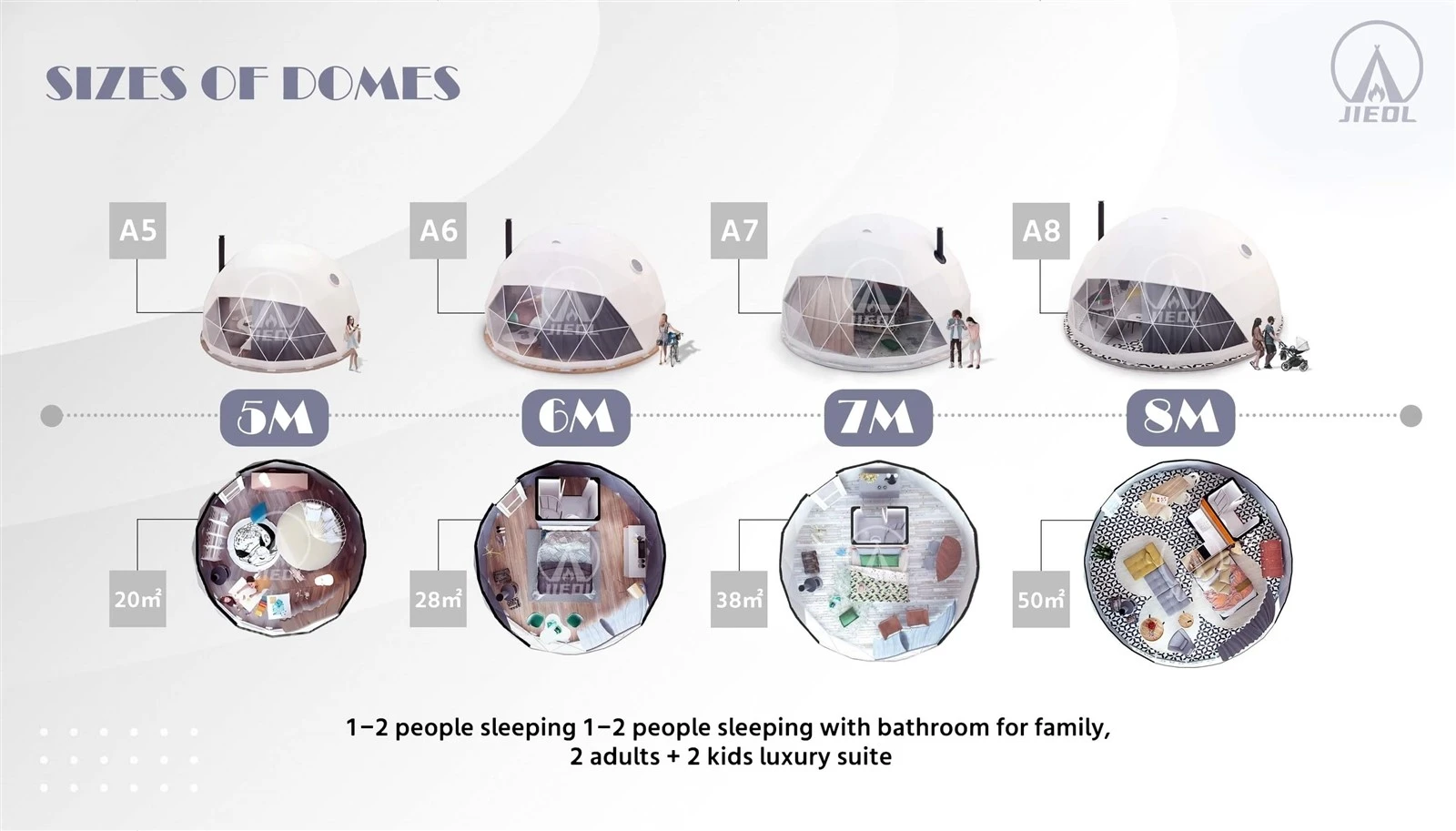
Choosing the right size and capacity is crucial when selecting a dome camping tent. Consider the number of people in your camping group and the amount of gear you need to accommodate. Dome tents come in various sizes, from compact two-person options to larger family-sized tents. For glamping aficionados, a geo dome tent with spacious interiors and designated living areas provides an extra layer of comfort and convenience.
Beyond the basics, high-quality dome camping tents may come with additional features that enhance the overall camping or glamping experience. Look for tents with vestibules for gear storage, multiple entry points for easy access, and integrated storage pockets to keep essentials organized. Glamping dome tents may go a step further, offering features like built-in lighting, customizable interior layouts, and even connectivity options for electronic devices.
Glamping dome tents: elevating outdoor comfort in style
The features to look for in a high-quality dome camping tent are designed to enhance both functionality and comfort. Whether you're a traditional camper seeking reliable shelter in the wilderness or a glamping enthusiast yearning for style and luxury, the geo dome tent emerges as a stylish and comfortable choice. Consider the design, durability, ventilation, ease of assembly, size, and additional features when selecting the perfect dome camping tent for your next outdoor adventure. With the right tent in tow, you can enjoy the beauty of nature without compromising on comfort and style, creating lasting memories in the great outdoors.
How to Store a Glamping Dome Tent
Dry your dome tent
If you do nothing else, make sure that your dome tent is dry before you store it. A dome dome tent that is put away damp will develop mildew, which will give your dome tent a funky odor. The moisture can also potentially damage the polyurethane waterproof coatings beyond repair. If you've ever had a dome tent that became flaky, tacky or smelly, that's likely because it was not dry before you stored it.
Keep it clean: If you returned home from your outing with a dirty dome tent, taking the time to clean it can help improve longevity, especially if it was exposed to sand, fine dust, bird droppings and tree sap.
Store your dome tent loosely in a cool, dry place
Keep it loose: Though nicely compact for backpacking, the stuff sack that came with your dome tent is a poor choice for long-term storage. You want dome tent fabrics to relax and breathe. An old pillowcase or similarly sized mesh bag will work well. You can neatly fold your dome tent up and place it in the bag or simply stuff it in.
Reduce tension: For dome tent poles, you can extend the life of the shockcord by storing the poles partially assembled to take tension off the cord. But not everyone has space to do this, so another option is to break the poles down by starting in the middle and working toward the ends. Collapsing poles down like this evenly distributes tension along the cord.
Keep it cool: When looking for a place to keep your dome tent, try to find a dry, cool spot in your home. This means avoid storing it in damp or hot locations like a basement, attic or car trunk. A gear closet or garage are both good options.
FAQ
Hot Tags: glamping dome tent, China glamping dome tent manufacturers, suppliers, factory